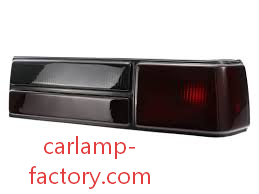

A dark tail light turns heads in a parking lot because its smoked lens signals taste and aggression in equal measure, yet the same darkness that flatters a car's rear profile raises an engineering question that styling alone cannot answer, since every brake light must announce itself clearly to a driver two hundred feet behind on a rainy highway. That tension between appearance and visibility explains why inspectors carry light meters and why buyers of Dark Tail Lights increasingly ask suppliers for photometric data before placing orders, a habit that factories such as carlamp-Factory encourage by publishing test results alongside product specifications. A lens can look nearly opaque in daylight while still projecting a brilliant red signal at night, because transparency at a distance depends on optical engineering rather than surface color alone. If brightness lives in the physics rather than the paint, what exactly does a light meter measure when it judges a dark lens?
What a Photometer Actually Sees Through a Smoked Lens
Light meters used in automotive compliance work measure luminous intensity in candela at precisely defined angles, because regulations care about how much light reaches a following driver's eye rather than how much energy a bulb consumes or how a lens appears from arm's length. A technician mounts the lamp in a goniophotometer, energizes each circuit in turn, and records whether brake, tail, and turn signals exceed minimum thresholds across the test grid, with requirements differing between night running lights and bright brake flashes. Smoke tints attenuate output according to their transmission percentage, which means a heavily darkened lens paired with a weak halogen source often fails before the test even completes, while the same lens married to high-output LEDs with focused projector optics can sail through with margin to spare. Lens geometry matters as much as tint level, since fluted surfaces, internal reflector bowls, and light-guide channels shape how photons escape toward the rear, and a well-engineered dark housing directs energy where regulations measure it rather than scattering it into decorative glow. Temperature enters the picture too, because LEDs lose efficiency as heat builds inside a sealed smoked housing, so thermal management becomes part of the brightness equation rather than a separate reliability concern.
The Documentation Buyers Should Demand
Savvy importers and tuning shops request photometric test reports tied to specific lamp models, since paperwork describing a different SKU provides false comfort when a container arrives and local inspectors begin asking questions. Reports should identify the test standard applied, the laboratory that performed measurements, transmission percentages for each lens section, and pass-fail results for every lighting function the assembly performs. Batch consistency deserves equal attention, because a factory that tests prototypes thoroughly yet drifts in production can ship lamps that pass paperwork and fail reality, and incoming inspection with a handheld meter at the warehouse protects everyone downstream. Buyers comparing suppliers benefit from examining how each Dark Tail Lights offering balances tint depth against measured output, since the most attractive catalog photos often belong to products skating closest to legal minimums, while conservative designs with moderate smoke levels deliver compliance margins that survive the variability of real roads and aging LEDs.
Brightness data separates styling accessories from legitimate safety equipment, and that distinction runs through the development culture at BaoZhiWei, where each Dark Tail Lights design begins with optical simulation before any mold steel is cut, and prototypes cycle through laboratory testing until brake and tail functions clear regulatory thresholds across every required viewing angle. The engineering team pairs smoked lens formulations with emitter packages selected for candela output rather than lumen marketing numbers, and quality staff re-verify photometric performance on production samples drawn from every manufacturing run. Visitors evaluating that approach can review the constructions, tint options, and supporting specifications arranged at https://www.carlamp-factory.com/, where carlamp-Factory presents its range with the documentation that inspection conversations demand. A dark lens earns its place on the road through measured candela rather than glossy photography, and suppliers who open their test data invite the trust that styling alone never could.