
Precision Switching for Automated Water Control Systems
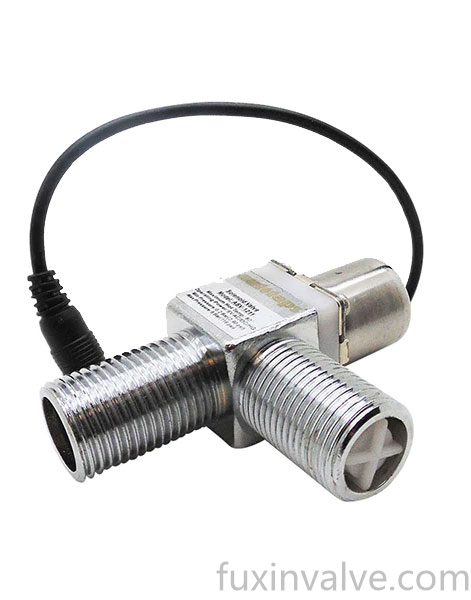
Automated fluid equipment relies on electrical signals to initiate mechanical actions within compact control components. A Pulse Solenoid Valve responds to a controlled electrical pulse by actuating its internal mechanism and changing the condition of a water passage. Zhejiang Fuxin Electrical Technology Co., Ltd. develops electromagnetic valve solutions with attention to coil consistency, magnetic circuit design, sealing performance, hydraulic structure, and manufacturing accuracy.
The electromagnetic coil converts electrical energy into magnetic force. Copper wire winding, insulation, bobbin construction, and connection quality all influence the resulting magnetic field. Controlled winding processes help maintain consistent electrical characteristics, while proper insulation supports electrical stability. Production inspection can verify continuity and resistance before the coil is incorporated into the completed valve.
The magnetic core and armature form the primary magnetic path. Their material properties and dimensions influence the force available to move the internal mechanism. The air gap is another important factor because changes in component positioning can alter magnetic efficiency. For this reason, core geometry, armature dimensions, surface condition, and assembly alignment need to be controlled during production.
Mechanical movement must be smooth enough for the actuator to respond predictably. The armature typically moves through a guide, where excessive friction can reduce responsiveness and unsuitable clearance can affect positioning. Precision machining helps establish appropriate dimensions, while surface finishing can support smooth interaction between moving components. Consistent assembly is then needed to preserve these relationships in the finished valve.
The hydraulic mechanism translates actuator movement into fluid regulation. Depending on the design, a diaphragm, plunger, gasket, or another sealing element may control the water passage. The valve seat and sealing surface must be accurately positioned so that the passage can close consistently. Internal geometry also influences how water moves through the valve when the mechanism changes state.
Material selection for water-facing components should account for the operating environment. Valve bodies and internal metal parts require suitable mechanical and environmental characteristics, while elastomeric seals need appropriate flexibility and compression recovery. Temperature variation, pressure conditions, repeated cycling, and water compatibility can all influence the long-term behavior of these materials.
The internal flow path requires careful coordination with the sealing mechanism. Inlet and outlet passages, orifices, channels, and valve seats influence pressure behavior and fluid movement. Engineers should consider the valve as part of the complete hydraulic circuit because surrounding plumbing conditions can affect how the component responds during operation.
Pulse-driven operation also requires compatibility with the electronic controller. The control circuit determines when the electrical signal is delivered, while the valve converts that signal into mechanical movement. Electrical connections, switching logic, coil characteristics, and actuator response should therefore be evaluated together. This is particularly important in automated faucets, sanitary fixtures, water dispensers, and appliances where valve operation is linked to sensors or programmed control sequences.
Manufacturing cleanliness can influence valve reliability as well. Particles or machining residue may interfere with moving components, sealing surfaces, or narrow internal passages. Appropriate cleaning and inspection procedures can reduce contamination introduced during production. Assembly environments should also be managed to maintain consistent conditions for sealing and electromagnetic components.
Quality control should extend from incoming materials to final testing. Material inspection can verify component conformity, machining checks can monitor critical dimensions, and coil testing can identify electrical inconsistencies. During final assembly, manufacturers can inspect sealing installation and mechanical movement. Finished valves can then undergo leakage and functional testing to confirm that the electrical and hydraulic sections operate together as intended.
For equipment manufacturers evaluating a Pulse Solenoid Valve, important factors include electromagnetic response, magnetic materials, coil consistency, sealing design, hydraulic geometry, controller compatibility, and manufacturing quality. Zhejiang Fuxin Electrical Technology Co., Ltd. combines these considerations in its sanitary and water-control valve production, with related solutions available at https://www.fuxinvalve.com/product/sanitary-ware-solenoid-valves/.

 Arabic
 French
 Spanish
 Portuguese
 Deutsch
 Turkish
 Dutch
Dutch
 Italiano
 Russian
 Romaian
 Portuguese (Brazil)
 Greek
Greek