
RLINGD Explains Prescription Lenses for Auto Darkening Helmets
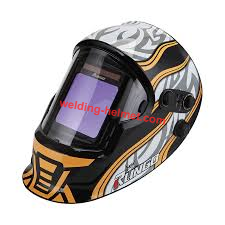
Welders who depend on corrective eyewear face a daily puzzle that rarely appears in equipment brochures. A custom auto darkening welding helmet must shield the eyes from intense arc light while still allowing the wearer to see the weld pool with precision, and that balance becomes complicated when prescription lenses enter the equation. Many welding professionals assume they must choose between clear vision and proper protection, or resort to awkward workarounds that compromise safety. The specialists at welding-helmet have spent considerable time addressing this exact concern for welders across different industries. Does a modern helmet truly accommodate the millions of welders who wear glasses every day?
The straightforward answer is yes, though the path to that answer involves several practical considerations. Standard welding helmets offer limited room between the lens and the face, which means regular eyeglasses often press against the inner shield or sit at uncomfortable angles. This pressure causes headaches during long shifts and can shift the glasses out of position at critical moments. Manufacturers recognized this problem years ago and developed several solutions that work with auto darkening technology.
The most common approach involves prescription inserts, sometimes called cheater lenses or Rx inserts. These small corrective lenses mount directly inside the helmet, positioned close to the eyes and aligned with the viewing window. Because they sit inside the shell rather than on the nose, they eliminate the pressure points that make regular glasses uncomfortable under a hood. Welders order these inserts according to their prescription and install them using brackets designed for their specific helmet model.
Another option involves oversized helmets built with extra internal clearance. These shells provide enough room for standard eyeglasses without forcing the frames against the face. The tradeoff comes in the form of added bulk and weight, which some welders find distracting during overhead work or confined space jobs. Fit adjustment becomes critical with these models, since a loose helmet allows the glasses to shift while a tight one creates pressure against the temples.
Contact lenses represent a third path, though this choice carries its own set of debates within the welding community. Some welders wear contacts without issue, while others report dryness and irritation from the heat and airflow inside a helmet. Eye care professionals sometimes advise against contacts in welding environments because of the risk of foreign particles becoming trapped beneath the lens. Each welder must weigh these factors against personal comfort and medical advice.
Helmet design itself has evolved to address the needs of glasses wearers. Adjustable headgear, pivoting lens assemblies, and customizable nose bridges allow welders to fine-tune the fit until the helmet sits correctly regardless of facial structure. Some premium models include removable padding that creates additional space around the temples. These features matter enormously for welders who spend entire shifts under a hood and cannot afford distraction or discomfort.
Lightweight materials have changed what welders can expect from a helmet. Modern shells use composites and engineered plastics that reduce weight without sacrificing protection, which means welders can wear larger helmets with extra clearance without feeling the strain. Auto darkening cartridges have also become thinner, freeing up interior space that earlier generations of equipment consumed. Together, these advances make prescription compatibility far less of a compromise than it once was.
Ventilation plays an underappreciated role in this discussion. Heat buildup inside a helmet causes sweating, which in turn causes glasses to slide and fog. Welders who wear prescription lenses benefit enormously from helmets with airflow channels or powered respirator systems that move air across the face.
Choosing among these options comes down to understanding your own working conditions and vision needs. A welder who spends eight hours under a hood on structural steel faces different demands than someone doing occasional repair work in a home garage. Trying inserts, testing oversized shells, and asking suppliers direct questions about compatibility takes time upfront, but the payoff shows up in steadier hands and cleaner welds. For welders ready to stop squinting through scratched safety glasses or wrestling with frames that never sit right, a Custom Auto Darkening Welding Helmet paired with the right prescription solution from https://www.welding-helmet.com changes the entire experience, letting attention stay where it belongs, on the weld itself.

 English
 Arabic
 French
 Spanish
 Portuguese
 Turkish
 Dutch
Dutch
 Italiano
 Russian
 Romaian
 Portuguese (Brazil)
 Greek
Greek