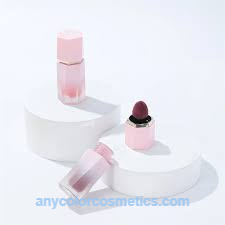

What Blush OEM&ODM Solutions Fit Cushion Blush, Blush Wands, Blush Sticks and Palette Formats?
A compact of cream blush looks effortless on a vanity, yet the object itself represents dozens of quiet decisions about viscosity, tooling, filling temperature and closure tolerance, and that hidden complexity explains why serious founders spend weeks evaluating a blush OEM&ODM partner before touching a single formula file. anycolorcosmetics has spent years assembling exactly those decisions under one roof, connecting pigment dispersion, cushion saturation, wax calibration and case decoration inside one workflow so that a founder can hold a finished prototype in hand instead of imagining it, and the practical question every new label must answer becomes unavoidable: which platform should carry your first shade, and what does each one silently demand from the factory standing behind it?
Four Platforms, Four Sets of Quiet Engineering
Cushion blush sits closest to skincare in spirit because the format delivers pigment through a saturated sponge, and that single fact reshapes the entire build. The formula must stay fluid enough to travel through pores yet cohesive enough to resist leaking through the cushion wall during shipping, which pushes chemists toward carefully balanced ester systems and low-volatile carriers. NiFeiCosmetic approaches the cushion by tuning sponge density and pore size against a chosen viscosity, so colour payoff, bounce-back feel and drying time move together as one system instead of competing against each other. Mirrored lids, magnetic closures and integrated applicators turn the compact into a small object worth keeping on a dressing table, while refill cartridges let the outer shell survive several seasons of use.
Liquid wands tell a different story, since success rests almost entirely on the doe-foot tip and the neck of the bottle. A neck machined a fraction too tight starves the applicator, while a loose neck floods the cheek with pigment on the very first stroke. Engineers therefore test flow rate after a heat cycle, a cold cycle and a vibration run, mimicking a parcel crossing a continent before anyone approves a design. Cap interior geometry carries equal weight because the tip must seal cleanly without touching the threads, keeping the bottle presentable after months inside a handbag. Shade stability deserves attention here as well, since thin liquid films oxidise faster than pressed powders and require thoughtful antioxidant choices alongside air-tight sealing.
Twist-up sticks live or die by wax chemistry. A bullet that is too soft slumps inside a warm parcel, while an overly brittle one snaps at the first confident swipe across the cheekbone. The pleasant glide shoppers remember comes from layered esters and finely milled powders suspended in a calibrated wax lattice, moulded into a bullet that releases colour with minimal drag and leaves a soft-focus veil rather than a greasy film. The case earns equal scrutiny: a sturdy twist mechanism with a satisfying click, a cap that seats squarely, and a shoulder that never rattles all communicate craftsmanship at a price point where people touch before they buy. Sculpted tips for contour work, travel-height bullets and heart-shaped moulds for gifting all extend the same tooling family without fresh investment in steel.
Where Shade Accuracy, Claims and Production Scale Meet
Pressed palettes carry the heaviest coordination burden because several pans, a mirror, perhaps a brush and a printed carton must arrive as one harmonious object. Pan colour must read true under mixed lighting, so shade approval happens on the final pressed surface rather than on a paper draw-down, and pressing force itself influences payoff because compacted powder releases pigment differently than a loose blend. Chip resistance is measured through drop tests, binder levels are adjusted until pans survive a fall onto tiled bathroom floors, and dust containment during pressing protects neighbouring shades from cross-contamination that would ruin an otherwise flawless set.
Sampling speed silently decides which young labels survive their first year, because founders rarely tolerate six-week rounds. Factories that maintain base libraries, component stock and in-house decoration compress that calendar dramatically: a first physical sample within days of a shade conversation, a revised texture inside one week, and decorative proofing on the chosen case before the artwork deadline closes. Modest minimum orders let a startup place three finishes on the market instead of betting an annual budget on one, and disciplined cost modelling at quotation stage protects margin when the brand grows from a single trial invoice into steady replenishment.
Documentation and lot-to-lot consistency now persuade buyers far past the charm of one gorgeous prototype, since shade lots must reconcile against retained references, challenge testing must confirm preservation adequacy for water-bearing systems, and any vegan or sensitive-skin claim needs evidence assembled long before packaging artwork enters approval. A partner housing tooling, decoration, filling and quality control under one address removes the telephone-game losses that appear when components, colour and production live in separate buildings, and the range of finished references visible at https://www.anycolorcosmetics.com hints at how much disciplined engineering sits behind an unassuming tube. Choosing a blush OEM&ODM relationship is therefore a decision about your next several launches rather than a single order: commit to the platform your formula truly deserves, insist on physical prototypes early, and the finished compact will speak clearly on the shelf, on camera and on the skin where it ultimately matters.