
Engineering Precision for Original Equipment Lighting
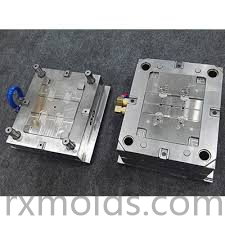
Original equipment vehicle lighting must meet coordinated requirements for appearance, component integration, optical performance, and manufacturing consistency. Behind each molded lens, housing, reflector, or light guide is a tooling system designed to reproduce the product's geometry under controlled processing conditions. An OEM Automotive Lamp Mold therefore requires careful engineering across material selection, cavity design, thermal management, machining, and validation.
The development process begins with a detailed assessment of the component's function and construction. A lighting assembly may combine transparent optical elements with structural plastic sections containing mounting bosses, ribs, clips, or sealing interfaces. Each feature affects how the mold should be divided, where material should enter the cavity, and how the finished part can be removed. Reviewing these details early helps align tooling decisions with the intended assembly requirements.
Polymer characteristics play a major role in the design process. Materials used for optical components may require carefully controlled surface conditions and processing stability, while structural sections may prioritize impact resistance, dimensional stability, or heat resistance. Shrinkage and flow behavior also influence the final dimensions. Engineers should therefore evaluate material data together with the component geometry before finalizing the mold structure.
Mold flow analysis helps assess potential problems before physical manufacturing. Engineers can use simulation to examine filling balance, pressure changes, possible weld lines, air entrapment, and areas that may be difficult to fill. The findings can inform gate placement, runner design, venting, and other cavity details. This early evaluation helps reduce avoidable tooling changes and provides a stronger technical basis for the first molding trial.
Optical features require precise cavity construction because small geometric differences can affect the behavior or appearance of light. Lens surfaces may include curved profiles, fine patterns, or structures designed to distribute illumination. CNC machining provides the foundation for producing complex shapes, while EDM can support certain intricate features. Appropriate grinding and polishing processes may then be used to achieve the specified surface condition.
The required finish should be defined according to each surface's function. An optical area may need controlled smoothness and accurate geometry, whereas an exterior decorative section may require a consistent texture. These requirements should be incorporated into the tooling plan from the beginning. Surface finishing is not merely cosmetic; it can influence component appearance, release behavior, and the ability to reproduce the intended design consistently.
Cooling system design is equally important. Polymer must lose heat before the molded component can be ejected, and uneven cooling can contribute to deformation, dimensional changes, or residual stress. Engineers should consider wall thickness, cavity depth, material properties, and local heat concentration when arranging cooling channels. A balanced thermal design supports repeatable processing and reduces the likelihood of inconsistent part geometry.
Venting provides another essential control mechanism. Air displaced by incoming material must escape through suitable paths. Inadequate venting can result in burn marks, incomplete filling, or other localized defects. Vent positions should reflect the expected filling pattern and the geometry of the cavity while protecting critical optical and cosmetic areas.
Ejection design must accommodate the component's shape and sensitivity. Thin edges, curved surfaces, deep cavities, and visible regions may not tolerate concentrated mechanical forces. Ejector pins, sleeves, lifters, and related mechanisms should be arranged to provide balanced release. Proper draft angles also help the molded component separate from the cavity without unnecessary friction or surface damage.
Tool validation combines dimensional inspection with practical molding trials. Engineers should review cavity accuracy, mold alignment, moving mechanisms, cooling passages, and surface conditions during manufacture. Sample components can then be checked for filling, appearance, dimensional accuracy, ejection, and assembly fit. When problems occur, a structured investigation helps distinguish tooling issues from material or processing variations.
Production stability also depends on maintenance planning. Repeated cycles can gradually affect cavity surfaces, moving components, cooling systems, and alignment features. Periodic inspection helps identify wear before it affects product quality. Documented maintenance and trial records provide useful references when tooling requires adjustment or moves into a new production phase.
An integrated digital workflow connects the engineering stages. CAD establishes the geometry, CAE supports simulation, and CAM translates approved data into machining operations. When these systems are combined with manufacturing experience and systematic inspection, tooling development becomes more coordinated and traceable.
Taizhou Renxin Mould Co., Ltd. supports automotive lighting projects through mold engineering, simulation, precision machining, surface finishing, and tooling validation, with further details available at https://www.rxmolds.com for manufacturers evaluating an OEM Automotive Lamp Mold for original equipment lighting production.

 English
 Arabic
 French
 Spanish
 Portuguese
 Deutsch
 Turkish
 Dutch
Dutch
 Russian
 Romaian
 Portuguese (Brazil)
 Greek
Greek