
What Buyers Should Consider When Sourcing Fireproof Textiles
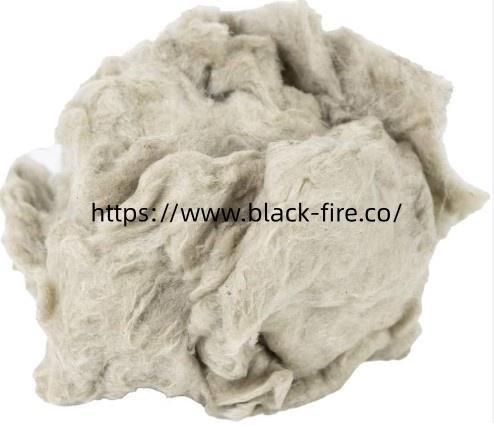
Protective textile selection begins with understanding the conditions a material may encounter during use. When evaluating Fireproof Fabric, buyers should look beyond a fabric's name and consider its fiber structure, construction method, resistance to heat exposure, and suitability for the intended finished product. These factors are particularly relevant to manufacturers developing protective clothing, welding accessories, industrial barriers, and equipment covers, where the material must work as part of a complete safety solution.
Material composition plays a central role in how a textile responds to heat and flame. Some conventional fabrics obtain flame resistance through chemical treatments, while other technical textiles are developed from fibers designed to provide specific thermal characteristics. These approaches can differ in how they respond to aging, repeated cleaning, mechanical wear, and processing. Buyers should ask how the material achieves its protective properties and whether the characteristics remain appropriate for the expected service environment. Zhejiang Taizhou BlackFire Technology Co., Ltd. focuses on carbonlene materials and advanced non-combustible textile development for specialized protection applications. Its material research provides a foundation for exploring alternatives to conventional textile structures. (Official company information)
Fabric construction is another important consideration. Woven fabrics can provide a stable structure for garments, covers, and protective barriers, while knitted constructions may offer different levels of flexibility and surface adaptability. Fiber arrangement, yarn structure, and fabric density influence drape, handling, air movement, and resistance to abrasion. The final result also depends on how the fabric is cut, stitched, layered, or joined with other materials. Buyers developing finished products should therefore assess not only the textile roll itself but also its behavior during manufacturing and assembly.
A sound purchasing process begins by defining the intended application. Protective clothing for industrial workers has different requirements from welding blankets, equipment covers, or heat-shielding barriers. Buyers should identify the likely sources of heat, the possibility of direct flame or flying sparks, potential chemical contact, and the amount of movement or abrasion expected. They should also consider whether the material will be worn directly, incorporated into a multilayer assembly, or installed as a stationary protective component. Relevant test reports and applicable safety standards should be reviewed before a material is approved for use.
Technical performance depends on how several properties interact. A textile may need to retain structural integrity during heat exposure while also meeting requirements for flexibility, wear resistance, and compatibility with adjoining materials. Protective garments must be designed as complete systems, with seams, closures, linings, and other components considered alongside the fabric. Industrial covers and barriers have their own installation requirements, including attachment methods and the way the textile overlaps or encloses the protected area. Coatings and surface treatments may contribute additional functions, but buyers should confirm that these features are appropriate for the intended conditions and maintenance procedures.
User experience is especially important when protective textiles are used in workwear. Employees may need to bend, reach, climb, handle tools, or remain in working positions for extended periods. Fabric flexibility, surface feel, breathability, and compatibility with other protective equipment can affect comfort and mobility. However, comfort should never replace application-specific safety evaluation. Product developers should consider the garment as a whole, including its fit, seams, closures, lining, and ventilation design, to understand how the textile contributes to practical use.
Maintenance requirements should be clarified before procurement. Dust, oil, moisture, industrial residues, and repeated handling can affect protective products over time. Buyers need to know which cleaning methods are suitable and whether laundering, abrasion, or chemical exposure may change the material's properties. Inspection procedures are also important for identifying damaged, contaminated, or worn products. Clear guidance from the material supplier can help garment manufacturers and end users establish appropriate care practices, storage procedures, and replacement criteria.
Design and appearance influence how the textile fits into its final application. Color, weave pattern, surface texture, and drape can affect both visual presentation and manufacturing suitability. Workwear manufacturers may need materials that coordinate with other garment panels, while industrial applications may prioritize a surface that can be cut, stitched, layered, or installed efficiently. Consistent material appearance can also support product identification and a coherent design across a protective equipment range. These considerations make communication between textile developers, garment manufacturers, and end users an important part of product development.
Customization can be useful when standard textile constructions do not fully match a specific working environment. Buyers can discuss fiber composition, weave or knit structure, finishing requirements, intended assembly methods, and relevant testing needs with a supplier before production. Zhejiang Taizhou BlackFire Technology Co., Ltd. develops carbonlene fabrics and related protective materials for applications including firefighting, industrial safety, construction, and other demanding environments. Buyers seeking further information about its textile products and material options can visit https://www.black-fire.net/product/

 English
 Arabic
 French
 Spanish
 Portuguese
 Deutsch
 Turkish
 Dutch
Dutch
 Italiano
 Russian
 Portuguese (Brazil)
 Greek
Greek