
Understanding Voltage Compatibility in Industrial Installations
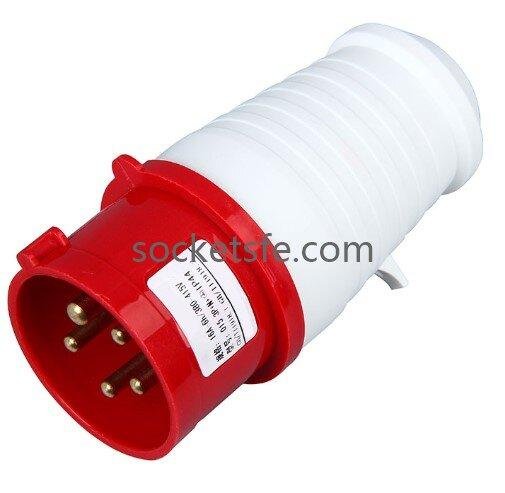
Industrial electrical systems depend on connectors that match equipment requirements and provide stable power under normal operating conditions. In workshops, commercial facilities, and manufacturing plants, 240V Industrial Plug solutions are used where the connected equipment and supply system require a compatible 240V connection. Choosing the correct product involves checking current capacity, grounding arrangements, contact quality, insulation performance, and the installation environment rather than considering voltage alone.
Voltage rating is the first selection criterion, but it is not the only one. Buyers must confirm the equipment's rated voltage, operating current, phase arrangement, and connection requirements. A connector rated for 240V may be available in several current ratings and pole configurations, so visual similarity does not guarantee compatibility. The plug, socket, cable, and protective devices must form a suitable electrical system designed for the intended load.
Contact materials affect conductivity and long-term performance. Copper and copper alloys are frequently selected for conductive components because they offer favorable electrical and mechanical characteristics. Contact surfaces must maintain reliable pressure during use, while suitable surface finishes can help manage oxidation and wear. Consistent contact dimensions are important because poor alignment or insufficient contact pressure may increase resistance and generate heat under load.
Insulation materials separate energized components and help reduce the risk of accidental contact. Engineering plastics used in connector housings should provide appropriate dielectric properties and mechanical strength for the application. Manufacturers also need to consider heat generated during normal operation, especially when connectors supply equipment with sustained current demand. Housing design, contact spacing, and assembly quality work together to support dependable electrical performance.
Grounding is another essential consideration for industrial installations. Where protective earth is required, the connector must provide a compatible grounding arrangement that works with the equipment and facility wiring. Correct grounding supports the intended electrical protection strategy, but it does not replace overcurrent protection, appropriate circuit design, or safe installation procedures. Buyers should follow local electrical codes and the manufacturer's instructions when selecting and installing components.
Environmental conditions also influence connector selection. Indoor production lines may prioritize impact resistance and convenient handling, while workshops or outdoor locations may require additional protection against dust and moisture. Enclosure ratings should be selected according to the actual exposure conditions. A higher protection rating can be beneficial in some environments, but it should not be treated as a substitute for correct cable installation, suitable mounting, or regular inspection.
Mechanical design matters when connectors are repeatedly connected and disconnected. Secure locking features can help prevent unintended separation, while strain relief reduces tension on cable terminals. A practical housing design also allows operators to handle the connector without placing unnecessary force on the cable or contact assembly. In facilities with frequent equipment changes, clear identification of voltage and current ratings can reduce selection mistakes and improve maintenance efficiency.
Quality assurance should cover both electrical and mechanical characteristics. Depending on the product design, testing may include checks of contact resistance, insulation performance, dimensional consistency, grounding continuity, and mechanical retention. Manufacturers should maintain traceability and consistent production processes to reduce variation between batches. For business buyers, technical documentation and evidence of compliance with relevant standards help establish whether the product is suitable for the intended application.
Installation and maintenance practices remain important throughout the connector's service life. Before servicing, power must be isolated according to established procedures, and qualified personnel should inspect the equipment for damaged insulation, loose fittings, discoloration, or signs of overheating. Cables should be sized for the intended current and installation conditions. Connectors showing damage should be removed from service until they can be safely repaired or replaced.
For procurement teams, evaluating the complete connection system can prevent avoidable compatibility issues. Confirm the voltage, rated current, pole configuration, cable requirements, environmental protection, and applicable certifications before ordering. It is also useful to review product availability and replacement options when planning recurring purchases. Reliable documentation makes it easier for distributors, contractors, and equipment manufacturers to standardize components across multiple installations.
Selecting a suitable 240V Industrial Plug requires a combination of electrical compatibility, dependable contact construction, appropriate insulation, and correct environmental protection. Careful evaluation supports stable operation and helps reduce installation risks. To explore industrial connector options and review available product information, visit https://www.socketsfe.com and verify the specifications required for your electrical application.

 English
 French
 Spanish
 Portuguese
 Deutsch
 Turkish
 Dutch
Dutch
 Italiano
 Russian
 Romaian
 Portuguese (Brazil)
 Greek
Greek