
What Should You Check Before Buying Power Wrenches?
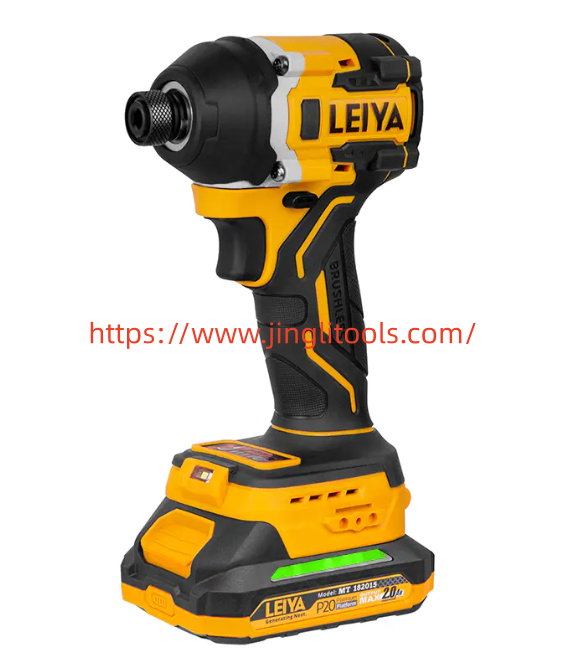
Power Wrenches are commonly used in machinery assembly, vehicle servicing, equipment maintenance, and industrial workshops. Before selecting a model, buyers should examine torque requirements, drive size, socket compatibility, operating conditions, and maintenance needs. Matching these factors to the intended application helps businesses avoid unsuitable purchases and gives operators clearer guidance when preparing tools for daily tasks.
Identify the Fasteners You Need to Handle
Start by listing the bolt and nut sizes involved in your regular work. Consider whether the task requires routine assembly, scheduled maintenance, or removal of fasteners that may have been tightened for a long period.
The required torque is an important selection factor. A tool intended for small components may not meet the demands of heavy equipment, while an unnecessarily large model may increase cost and operator fatigue during lighter work.
Request the rated torque range and relevant technical information for each candidate model. For connections that require precise tightening, follow the equipment manufacturer's specifications and use a suitable verification method. Do not assume that every impact tool provides calibrated torque control.
Providing the supplier with examples of your actual fastening tasks can make product recommendations more relevant and help you compare different models accurately.
Confirm Drive Size and Accessory Requirements
Drive size determines the sockets and accessories that can connect to the tool. Common industrial configurations include 1/2-inch, 3/4-inch, and 1-inch drives, but the appropriate size depends on the fasteners and the selected equipment.
Check which sockets your maintenance team already uses and whether additional accessories will be required. Ask the supplier to clarify which items are included in the quotation and which must be purchased separately. Use compatible impact-rated sockets when specified for the application.
Physical dimensions are equally important. A tool may have an appropriate torque rating but still be difficult to use in narrow spaces around engines, machinery frames, or closely positioned components. Review the overall length, housing size, handle shape, and operator access before ordering.
For purchasing departments managing several teams, recording drive sizes and accessory requirements can simplify inventory control and reduce the risk of ordering incompatible components.
Compare Available Operating Systems
Different tool systems suit different workplaces. Electric, cordless, pneumatic, and hydraulic designs each have particular requirements for energy supply, mobility, maintenance, and operating conditions.
Cordless equipment can be useful when workers move between service locations. Before purchasing, check battery compatibility, charging time, expected runtime, and replacement availability. For continuous use, consider how batteries will be managed throughout a working shift.
Pneumatic models require an appropriate compressed-air supply. Confirm the required pressure, airflow, hose connections, and compressor capacity. If the supply does not meet the manufacturer's specifications, operating performance may be affected.
Hydraulic equipment may be suitable for certain heavy-duty fastening applications. Buyers should verify compatibility with the hydraulic unit, hoses, operating pressure, and any required reaction accessories.
Compare the complete setup rather than the tool alone. Installation requirements, accessories, energy supply, and ongoing maintenance all contribute to the practical cost of using the equipment.
Consider Working Conditions and Operator Comfort
A tool used occasionally for repairs may have different requirements from equipment used repeatedly on an assembly line. Estimate the daily operating frequency and consider how long operators will hold the tool during each task.
Weight, balance, grip shape, trigger position, vibration, and noise can affect the working experience. Where possible, arrange a sample inspection or demonstration to assess handling before placing a large order.
The surrounding environment should also be considered. Dust, moisture, temperature, and restricted access may influence the model that fits a particular job. Check the manufacturer's instructions to determine whether the equipment is suitable for the planned operating conditions.
If several employees will use the same equipment, consider their working positions and the variety of tasks involved. Discussing these details with the supplier can help narrow the available options to models that suit the workplace.
Review Maintenance and Technical Documents
Before confirming an order, request the instruction manual, technical data sheet, maintenance guidance, and written warranty conditions. These documents help purchasing and maintenance teams understand how the equipment should be operated and serviced.
Ask which parts require routine inspection and whether replacement components are available. Depending on the model, maintenance may involve checking connections, cleaning components, inspecting hoses, or following specified lubrication procedures.
Confirm the availability of compatible sockets, adapters, protective equipment, and other accessories required for the intended application. For safety-sensitive work, verify the technical requirements established by the equipment manufacturer or the site's operating procedures.
Warranty conditions should also be reviewed carefully. Check the coverage period, exclusions, service arrangements, and any requirements relating to correct use or routine maintenance. Keeping these details on file helps teams plan servicing and compare supplier offers consistently.
Prepare Before Contacting a Manufacturer
A clear purchasing inquiry should include the intended application, fastener dimensions, required torque range, preferred drive size, estimated quantity, and delivery destination. These details give the supplier a practical basis for discussing available models.
For distributors and importers, it is also useful to confirm minimum order quantities, packaging specifications, sample availability, production schedules, and delivery arrangements. If custom labeling or documentation is needed, clarify the requirements before production begins.
Ask how models are identified on product labels and order documents. Consistent identification can make stock management easier and help buyers specify the same configuration when arranging future purchases.
When evaluating suppliers, technical support and clear communication deserve attention alongside quoted prices. Buyers should understand which accessories are included, which documents are available, and how product-related questions will be handled.For industrial tool options and purchasing inquiries, jinglitools provides a starting point for reviewing available products. Visit https://www.jinglitools.com/product/ to check the product range and contact the company about specifications, accessories, and supply arrangements for your workshop or industrial operation.

 English
 Arabic
 French
 Spanish
 Portuguese
 Turkish
 Dutch
Dutch
 Italiano
 Russian
 Romaian
 Portuguese (Brazil)
 Greek
Greek