


 About
About
How to Claim PAT Training Costs as a Tax-Deductible Expense for Self-Employed Electricians
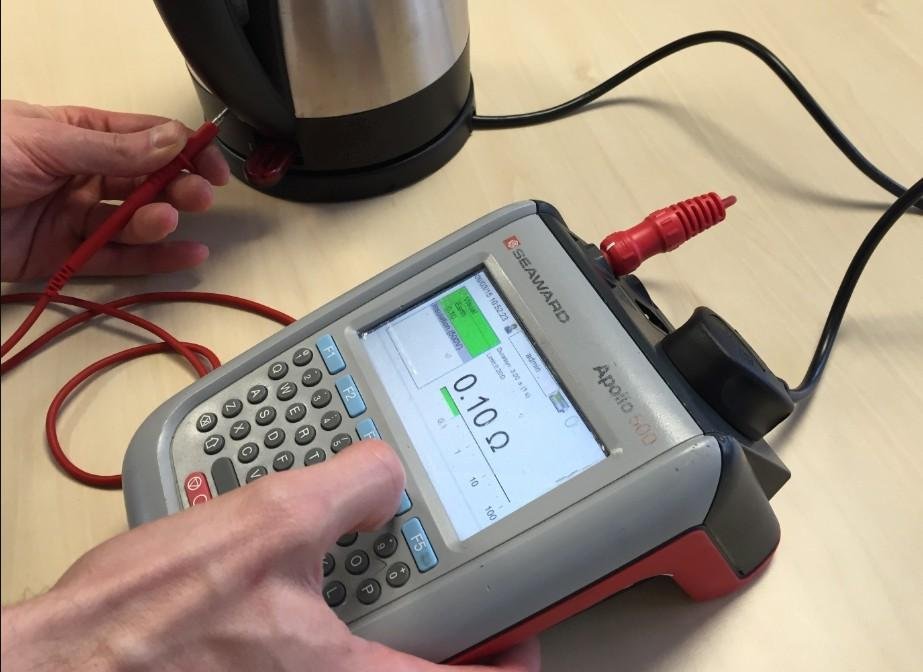
For the self-employed electrician, the landscape of professional development is not just about expanding your service offering—it is about managing the financial health of your business. Portable Appliance Testing (PAT) has become an essential service requirement for many commercial and residential clients, making it a lucrative addition to your portfolio. However, staying certified and compliant requires investment in high-quality training. Fortunately, HM Revenue and Customs (HMRC) recognizes that the costs associated with maintaining and upgrading your professional skills are often necessary business expenses. Understanding how to navigate the tax rules regarding professional development can significantly reduce your annual tax liability.
Distinguishing Between Updating Skills and New Acquisitions
One of the primary hurdles for self-employed individuals is understanding the boundary between "updating" existing skills and "acquiring" entirely new ones. Generally, HMRC allows a tax deduction for training costs that are intended to update or improve the skills used in your current trade. If you are already operating as an electrician, adding PAT testing to your existing service menu is usually classified as an improvement or update to your current professional toolkit, making it a legitimate business expense. However, if the training were for a completely unrelated field—such as a plumber training to become a florist—that would likely not be deductible. Because PAT testing is deeply integrated into the electrical trade, the costs associated with a professional pat testing course are almost always viewed as business-related investments rather than personal education, allowing for a straightforward claim on your annual tax return.
Navigating HMRC Guidelines for Professional Development
To ensure your claim stands up to scrutiny, you must maintain impeccable records of your expenditure. This means keeping clear digital or physical copies of all invoices, receipts, and course completion certificates. Your tax deduction claim should include not just the tuition fees for the pat testing course, but also the associated costs of the training, such as travel, accommodation, and the procurement of necessary testing equipment or certification materials. When you file your self-assessment tax return, these expenses are typically categorized under "professional fees" or "training costs." It is vital to consult with a qualified accountant or reference the latest HMRC guidance (such as BIM42525) to ensure that your specific business structure—whether you are a sole trader or operating through a limited company—is treated correctly under the current tax code, ensuring you maximize your claim without risking an audit.
Strategizing the Timing of Your Investment
Timing is everything in business tax planning. If you are looking to lower your taxable income for the current financial year, it is often wise to complete your professional development before the tax year ends on April 5th. By scheduling your pat testing course during a quieter period in your work calendar, you minimize the "opportunity cost" of lost billable hours while simultaneously capturing the deduction in the most beneficial tax window. Furthermore, investing in these courses allows you to hit the ground running with new certification before the start of the next busy season. This strategic approach to business management ensures that you aren't just reacting to industry demands, but actively shaping your career trajectory while maintaining a tax-efficient operation that consistently supports your long-term business goals.
The Long-Term ROI of Professional Certification
While the immediate tax deduction is an attractive benefit, the true value of professional training lies in the return on investment (ROI) that follows certification. PAT testing is a recurring necessity for businesses, landlords, and educational institutions, providing you with a reliable stream of repeat income. By obtaining your certification through a respected pat testing course, you gain the credibility to bid for larger commercial contracts that require certified compliance testing. This expands your client base and adds a layer of stability to your business revenue. When you consider that a significant portion of the upfront cost is eventually recovered through lower tax bills, the net investment becomes remarkably affordable. This is the hallmark of a successful self-employed business owner: using available financial tools to minimize costs while maximizing service delivery, professional standing, and long-term income potential.
Maintaining Compliance and Professional Standards
Beyond the financial and tax advantages, there is a fundamental ethical requirement for electricians to maintain the highest standards of safety. Regulations are subject to change, and technology continues to evolve; therefore, the knowledge gained in a formal pat testing course is not just about passing a test, but about ensuring that every piece of equipment you test is genuinely safe for public use. Your clients rely on your expertise to protect their premises and their personnel from fire and electrical hazards. When you are properly trained and certified, you provide that peace of mind. By making a regular commitment to ongoing professional development, you protect yourself from liability, secure your business against regulatory penalties, and cement your reputation as a trusted, highly skilled contractor. This dual focus—on both professional excellence and astute financial management—is what separates the most successful electricians in the market from the rest of the pack.

 English
 Arabic
 French
 Spanish
 Portuguese
 Deutsch
 Turkish
 Dutch
Dutch
 Russian
 Romaian
 Portuguese (Brazil)
 Greek
Greek