
What Should Buyers Check Before Choosing compositemould BMC Mould?
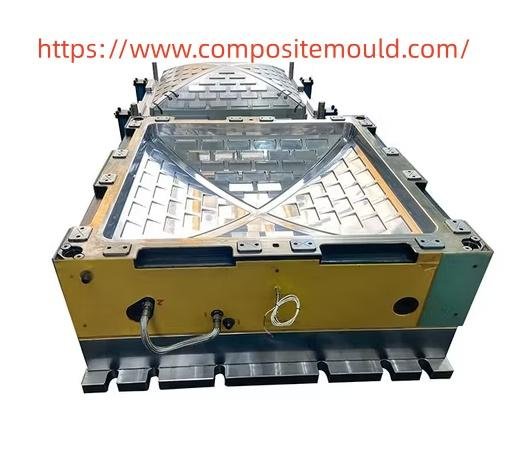
BMC Mould selection involves more than comparing quotations from different manufacturers. Buyers should consider how the tooling will work with the selected material, production equipment, component geometry, heating conditions, and inspection requirements. A detailed review before ordering can help identify technical concerns at an early stage and provide a clearer foundation for engineering communication. Product drawings, processing information, equipment specifications, and quality requirements should all be prepared before the final design is approved.
Begin With the Finished Component
The component drawing is one of the most important documents during the initial discussion. Buyers should provide accurate dimensions, three-dimensional data, samples, or other available technical information.
Engineers need to understand wall thickness, ribs, openings, inserts, curved sections, mounting areas, and critical tolerances. Functional surfaces should also be identified so that machining and inspection can focus on the areas that matter for actual application.
If the component is still being developed, buyers can discuss production feasibility before construction begins. Early engineering communication may help reduce unnecessary changes later.
Explain the Material Requirements
Material specifications should be provided together with the product information. Buyers can share the material grade, processing temperature, curing conditions, pressure requirements, component thickness, and other available technical parameters.
Material behavior can influence cavity design, heating arrangements, venting, loading procedures, and release planning.
Providing this information early gives the manufacturer a better understanding of the intended process and makes it easier to prepare a technical proposal based on actual production conditions.
Check Production Equipment
The tooling needs to fit the press and supporting equipment used by the customer. Buyers should therefore provide information about platen dimensions, working area, available pressure, opening stroke, heating system, and other relevant machine specifications.
Equipment compatibility involves more than physical dimensions. The loading method, connection arrangement, opening movement, and available operating space can also influence the proposed structure.
Before production starts, buyers can request an engineering review of the tooling against their actual equipment conditions.
Review Material Loading and Movement
Material placement can affect how the compound spreads inside the cavity. This deserves additional attention when the component has ribs, deep sections, inserts, narrow areas, or complicated geometry.
Buyers can ask how the loading position and cavity layout will be considered during engineering.
The discussion may also cover possible areas where material distribution could become difficult. Addressing these questions before machining gives the manufacturer an opportunity to adjust the design according to the intended process.
Examine Venting Arrangements
Air evacuation should be considered during the design stage. Certain component shapes can create areas where air becomes trapped during forming.
Buyers can ask where vents will be positioned and how the design considers parting areas, overflow locations, and important surfaces.
Venting also needs to remain practical for production maintenance. Easy access for cleaning and inspection can be useful when the tooling is used repeatedly.
Discuss Temperature Management
Heating conditions should be reviewed according to the material and production process. Buyers can ask about heating zones, temperature monitoring, heat distribution, and access to relevant components.
Large or complicated parts may require additional thermal planning because different areas can respond differently during heating and cooling.
The heating arrangement should therefore be integrated with the overall cavity structure instead of being considered as an isolated feature.
Define Surface Requirements
Surface expectations should be communicated before machining begins. Buyers should indicate whether the finished component requires polishing, texture, specific appearance conditions, or particular functional surfaces.
Not every cavity area necessarily requires the same treatment. Identifying visible and functional sections on the drawing helps the manufacturer plan machining and finishing work more accurately.
Buyers should also discuss cleaning and release-agent requirements to support consistent surface maintenance during production.
Consider Part Removal
The removal process should be reviewed before the final design is confirmed. Deep sections, undercuts, narrow areas, inserts, and curved structures can all affect how the finished component is released.
Buyers can ask whether draft angles, ejector arrangements, inserts, or other design features are needed.
A clear release strategy can help production personnel remove finished parts more consistently and reduce unnecessary handling difficulties.
Establish Acceptance Criteria
Inspection requirements should be agreed before manufacturing is completed. Buyers can specify critical dimensions, tolerance ranges, surface conditions, alignment requirements, and trial-part standards.
For complicated components, important measurement locations can be marked directly on the drawing.
A shared inspection plan gives the manufacturer a clear reference during final verification and provides the buyer with a defined basis for evaluating the completed tooling.
Evaluate Engineering and Manufacturing Capability
Price should be only one part of supplier comparison. Buyers can also review engineering communication, machining equipment, inspection resources, customization experience, trial procedures, modification support, documentation, and delivery arrangements.
compositemould provides customized tooling development and manufacturing services for thermoset composite applications. Its production capabilities include machining and other manufacturing resources designed to support different project requirements.
Good communication is particularly valuable for customized projects. Buyers should confirm how drawings are reviewed, how revisions are recorded, and how technical feedback is handled during the project.
Ask About Trial Production
Trial production provides practical information before regular manufacturing begins. Buyers should agree with the supplier on the items that need to be checked during testing.
Depending on the component, evaluation may include dimensions, surface appearance, material distribution, flash, release performance, alignment, and processing conditions.
Any required modifications should be recorded clearly. This gives both parties a common reference when reviewing the trial results and deciding whether further adjustments are needed.
Plan for Maintenance
Long-term maintenance should be discussed before ordering. Buyers can ask about cleaning access, replaceable components, inspection points, surface repair, storage, and possible future modifications.
Maintenance requirements may also influence the structure selected during the design stage. A practical service arrangement can make routine production management easier.
Buyers preparing a new project should therefore compare the complete technical proposal rather than focusing only on the initial quotation. Reviewing material requirements, equipment compatibility, cavity design, heating, venting, surface conditions, release methods, inspection, trial production, and maintenance can provide a clearer basis for purchasing decisions. Manufacturers seeking customized tooling solutions can review the product range from compositemould at https://www.compositemould.com/product/ and discuss component drawings, production conditions, equipment information, and project requirements with the manufacturer.

 English
 Arabic
 Spanish
 Portuguese
 Deutsch
 Turkish
 Dutch
Dutch
 Italiano
 Russian
 Romaian
 Portuguese (Brazil)
 Greek
Greek