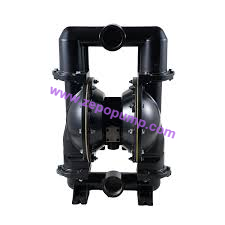

Choosing an industrial pump involves much more than comparing product photographs or reviewing a catalogue. Buyers need to understand the fluid being transferred, the working environment, installation conditions, and the support available after delivery. A reliable China Aluminum Alloy Pneumatic Diaphragm Pump Manufacturer should be able to explain these considerations clearly, helping customers identify equipment that matches their actual operating needs. Through its website, zepopump introduces diaphragm pump products and manufacturing capabilities for industrial users. When evaluating a potential supplier, what should buyers examine before placing an order?
Material compatibility is an essential starting point. Aluminum alloy is valued in pump construction for its relatively light weight, practical mechanical strength, and suitability for a range of general industrial applications. These characteristics can make installation and equipment handling easier, particularly when a pump needs to be repositioned or incorporated into an existing production line. However, aluminum alloy is not suitable for every chemical or fluid. Its compatibility depends on the properties of the transferred medium and the conditions in which the pump operates. Buyers should therefore describe the liquid accurately and ask the manufacturer to confirm whether the wetted materials are appropriate. This step helps prevent material mismatch and supports dependable operation.
The diaphragm material deserves equal attention because it repeatedly flexes during the pumping process and comes into contact with the transferred fluid. Different elastomers and fluoropolymer materials offer different chemical and mechanical characteristics. A material suitable for water-based liquids may not be appropriate for certain solvents, oils, or corrosive substances. Buyers should share information about the fluid composition, temperature conditions, and intended application before confirming a pump configuration. The ball valves, valve seats, seals, and other wetted components should also be considered as part of the complete material selection process. A pump is a coordinated assembly, so choosing one suitable component does not automatically guarantee compatibility across the entire unit.
Understanding the operating principle can also help buyers make a sound decision. A pneumatic diaphragm pump uses compressed air to move flexible diaphragms back and forth. This alternating movement changes the volume inside the pumping chambers, allowing fluid to enter through the inlet and leave through the discharge passage. Check valves guide the liquid in the intended direction during each cycle. Since compressed air provides the driving force, the pump does not rely on an electric motor directly driving the liquid-handling mechanism. This operating approach is useful in various industrial environments where flexible installation and fluid transfer are required. Buyers should still confirm that their air supply, pipe arrangement, and operating conditions are compatible with the selected pump.
Manufacturing capability is another important factor when comparing suppliers. A pump's appearance alone cannot reveal the quality of its internal passages, sealing surfaces, air distribution components, or assembly work. Buyers can ask how the manufacturer manages material inspection, machining, assembly, and final product testing. Consistent manufacturing processes help maintain stable product quality and reduce unexpected issues during installation. Zhejiang Zhanbo Diaphragm Pump Manufacturing Co., Ltd. describes its manufacturing operations as covering research and development, production, sales, and service. Its website also outlines production processes that include precision casting, CNC machining, and automated assembly, together with quality inspection procedures. These details provide useful reference points when assessing a supplier's production capabilities.
A suitable product range is also valuable because industrial projects rarely share identical requirements. One application may involve transferring coatings or oils, while another may handle adhesives, wastewater, or other process liquids. Buyers should not assume that one pump configuration can serve every purpose. Instead, they should compare the available pump structures, connection arrangements, diaphragm materials, and maintenance requirements against the actual installation. A manufacturer that offers technical communication and product customization can help clarify these choices. The zepopump website presents aluminum alloy diaphragm pump options alongside other pump materials and product series, giving buyers a starting point for reviewing different configurations.
The buying experience should continue after the product has been selected. Before ordering, customers should be able to discuss application details, installation arrangements, spare parts, delivery expectations, and maintenance procedures. Clear technical communication is especially useful when a pump is being integrated into an unfamiliar system or replacing equipment already in service. After-sales guidance can also help operators understand installation, daily operation, troubleshooting, and routine maintenance. Buyers should ask whether manuals, technical consultation, and service support are available, rather than treating the purchase as a transaction that ends when the equipment arrives.
The physical design also affects how conveniently a pump fits into a working environment. Housing shape, port orientation, connection type, and access to serviceable components can influence installation and maintenance. A compact arrangement may be useful where floor space is limited, while accessible connections can make inspection and pipework arrangements easier. Surface finish and casting quality are worth checking, but visual appearance should be considered alongside structural integrity and sealing performance. Buyers can request product drawings or installation guidance to understand how the pump will fit with nearby equipment before finalizing their selection.
For companies sourcing fluid-transfer equipment, a dependable supplier should combine material knowledge, manufacturing consistency, product guidance, and responsive service. Reviewing the product range, discussing the working medium, and confirming installation requirements can make the purchasing process more informed. Buyers interested in aluminum alloy models can visit https://www.zepopump.com to examine available product options and identify a suitable direction for their applications. Selecting a China Aluminum Alloy Pneumatic Diaphragm Pump Manufacturer with clear technical communication and a practical understanding of industrial fluid handling can help businesses choose equipment that fits their processes and ongoing operational needs.